
 By Siam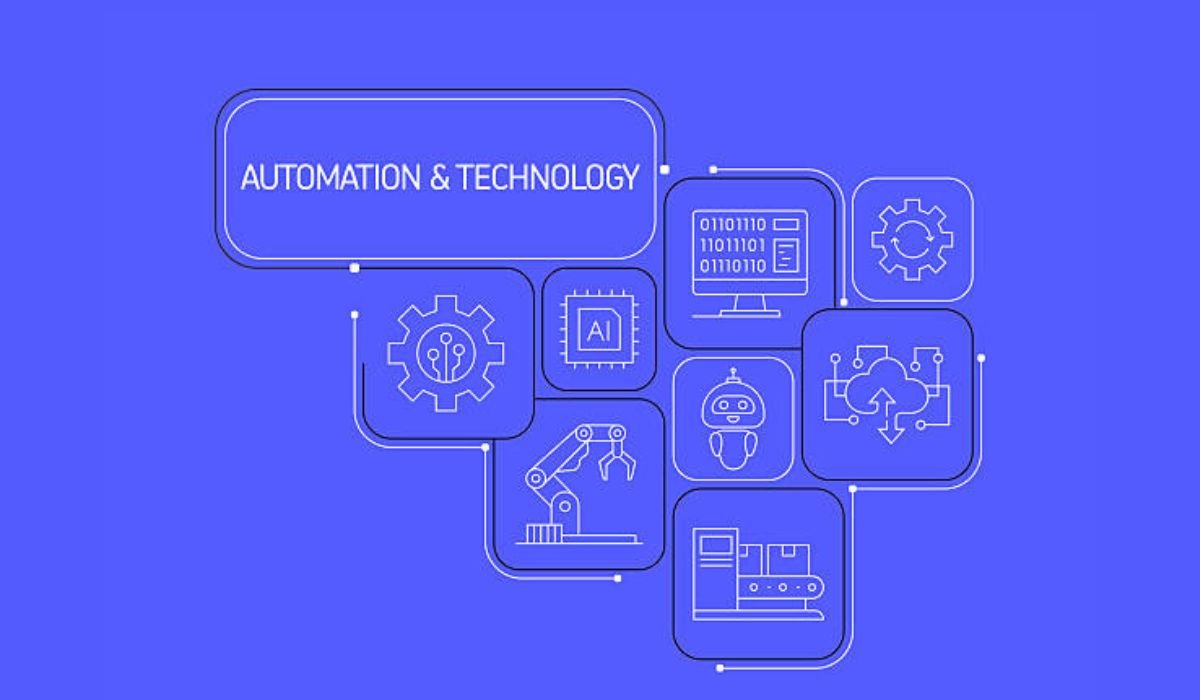
Remember when “digital transformation” meant moving your filing cabinet to the cloud? That was the warm-up. Today, the pace of innovation isn’t just accelerating; it’s fundamentally rewriting the rules of competition. Business leaders are facing a stark new reality: adapt to the convergence of intelligent automation and groundbreaking technologies, or risk being left behind. This is no longer a niche IT discussion; it’s a core strategic imperative for survival and growth. Welcome to the era of A&TA—Automation and Technological Advancements.
For business owners, CTOs, and strategists, understanding and implementing A&TA is the new frontier. This comprehensive guide will demystify A&TA, moving beyond the hype to provide a clear understanding of its core components, its transformative impact across industries, and a practical, actionable roadmap for implementation. By the end, you will see A&TA not as a cost center, but as the most powerful engine for securing a sustainable competitive advantage.
Decoding A&TA: The Core Components of Automation and Technological Advancements
At its heart, A&TA represents the strategic fusion of two powerful forces:
- Process Automation: This is the execution of rule-based, repetitive tasks without human intervention. Think Robotic Process Automation (RPA) that handles data entry, workflow automation tools that streamline approval processes, or even automated customer service chatbots. It’s about efficiency, accuracy, and freeing up human capital.
- Technological Advancements: This is the suite of emerging technologies that provide the “brain” and “nervous system” for modern business. This includes Artificial Intelligence (AI), the Internet of Things (IoT), blockchain, advanced robotics, and more. These technologies enable perception, prediction, and complex decision-making.
The critical insight is that the true power of A&TA lies in their synergy. Automation without advanced intelligence is rigid. Advanced technology without automation is an untapped potential. Together, they create intelligent, self-optimizing systems. We’ve moved from the simple mechanization of the first Industrial Revolution to systems that can learn, adapt, and act autonomously.
Artificial Intelligence and Machine Learning: The Engine of A&TA
If Automation is the muscle, AI and Machine Learning (ML) are the brain and central nervous system. AI’s role in A&TA is to handle tasks that require cognition.
- Intelligent Decision-Making: Unlike simple automation that follows an “if X, then Y” rule, AI can analyze vast datasets to make nuanced decisions. For example, it can assess credit risk, detect fraudulent transactions in real-time, or personalize marketing offers at an individual level.
- Prediction and Forecasting: ML algorithms excel at finding patterns in historical data to predict future outcomes. This is revolutionizing sectors through predictive maintenance (anticipating machine failures before they happen), demand forecasting, and even identifying at-risk patients in healthcare.
- Continuous Improvement: A key differentiator of ML is its ability to learn and improve over time without being explicitly reprogrammed. An automated quality control system powered by ML doesn’t just identify known defects; it learns to recognize new, emerging flaws, constantly enhancing its accuracy.
ALSO READ: Kirby Dedo: The Unsung Robotic Finger Powering Modern Electronics Manufacturing
The Hardware & Software Ecosystem: Robotics and IoT
While AI operates in the digital realm, A&TA has a profound physical dimension, bridging the digital and physical worlds.
- Advanced Robotics: Today’s robotics extend far beyond repetitive welding arms on an assembly line. We have collaborative robots (“cobots”) that work safely alongside humans, drones performing inventory checks in massive warehouses, and robotic surgical systems enabling new levels of precision in operating rooms.
- The Internet of Things (IoT): IoT is the sensory layer of A&TA. By embedding sensors in physical assets—from jet engines to delivery trucks to office light fixtures—businesses can collect real-time data on performance, location, and condition. This constant stream of data is the fuel for AI-driven insights and automation triggers.
- The Role of Edge Computing: For time-sensitive A&TA applications, like guiding an autonomous vehicle or shutting down a malfunctioning generator, sending data to the cloud and back is too slow. Edge computing processes data locally, on or near the device, enabling real-time decision-making and action, which is critical for a robust A&TA strategy.
The Transformative Impact: A&TA Across Key Industries
The convergence of A&TA is not a future concept; it’s actively reshaping landscapes today. Its impact is measured in two key areas: unparalleled operational efficiency and revolutionary customer experiences.
- Manufacturing: The classic example, now evolved into the “Smart Factory.” AI optimizes production schedules, IoT sensors predict equipment maintenance, and autonomous robots handle logistics, creating a seamless, self-optimizing production floor.
- Healthcare: A&TA is enabling personalized medicine, with AI analyzing medical images for early disease detection more accurately than the human eye. Robotic process automation streamlines patient onboarding and billing, while IoT wearables provide continuous remote patient monitoring.
- Finance: In banking, AI algorithms power hyper-personalized investment advice (robo-advisors) and combat money laundering. Process automation handles millions of routine transactions, while chatbot assistants resolve customer queries instantly, 24/7.
Reimagining the Future of Work and Workforce Adaptation
The most common fear surrounding A&TA is mass job displacement. This perspective is both understandable and incomplete. The more accurate and strategic view is a shift towards human-machine collaboration.
A&TA primarily automates tasks, not entire roles. It takes over the mundane, repetitive, and data-intensive parts of a job, freeing up human workers to focus on tasks that require uniquely human skills: creativity, strategic thinking, empathy, negotiation, and complex problem-solving. The accountant is freed from data entry to become a strategic financial advisor. The marketing manager leverages AI-driven analytics to craft more creative campaigns.
The imperative for business leaders is clear: invest in upskilling and reskilling. The workforce of the future needs to be fluent in working alongside intelligent systems. This isn’t about replacing your team; it’s about empowering them to achieve more.
Driving Sustainable Growth and Efficiency
The business case for A&TA is compelling and quantifiable.
- Cost & Efficiency: A&TA drives down operational costs by reducing errors, speeding up processes, and optimizing resource allocation. An automated invoice processing system can work infinitely faster and with perfect accuracy compared to a human team.
- Scalability: A&TA makes business models inherently more flexible. Scaling an automated process often requires just additional computing power, not a proportional increase in headcount. This allows businesses to handle fluctuations in demand with agility.
- The ESG Connection: A&TA is a powerful tool for achieving Environmental, Social, and Governance (ESG) goals. It optimizes energy usage in smart buildings, creates safer working environments by handling dangerous tasks, and enables greater transparency and traceability in supply chains through technologies like blockchain.
Strategic Implementation: A Practical Roadmap for A&TA
Jumping into A&TA without a strategy is a recipe for wasted investment and “islands of automation” that don’t talk to each other. Success requires a deliberate, phased approach.
- Assess and Prioritize: Begin with a thorough audit of your processes. Identify tasks that are high-frequency, rule-based, and prone to human error. These are your low-hanging fruit. Prioritize based on potential impact and implementation complexity.
- Build a Cross-Functional Team: A&TA is not an IT-only initiative. Assemble a team with representatives from operations, finance, HR, and the C-suite. Diverse perspectives ensure solutions are practical and aligned with broad business goals.
- Start with a Pilot Project: Choose one of your high-impact, low-complexity processes for a pilot. This could be automating a specific report generation, a customer onboarding workflow, or a data validation process. A successful pilot delivers a quick win, builds momentum, and provides valuable lessons.
- Scale and Integrate: Use the momentum from your pilot to scale successful initiatives and integrate them with core business systems (like your ERP or CRM). This is where the synergy effect truly kicks in.
- Foster a Culture of Continuous Improvement: A&TA is not a “set it and forget it” project. Establish feedback loops. Use the data and insights generated by your A&TA systems to identify new optimization opportunities, creating a virtuous cycle of improvement.
Avoiding Pitfalls: Security and Ethical Considerations
The path of A&TA is not without its challenges. Proactively addressing them is a non-negotiable part of the strategy.
- Security & Integration: As you connect more systems and data streams, your attack surface expands. A robust cybersecurity framework must be built into every layer of your A&TA initiative. Furthermore, legacy systems can create significant “integration debt,” requiring careful planning and potential modernization.
- Ethical Deployment: The algorithms powering A&TA are only as unbiased as the data they’re trained on. A critical responsibility for leaders is to ensure their AI systems are fair, transparent, and free from discriminatory bias. This requires diverse data sets and ongoing auditing.
- Governance Framework: Who is accountable when an automated system makes a wrong decision? A clear governance framework is essential. It should define ownership, establish oversight committees, and create protocols for auditing outcomes and addressing failures.
Conclusion
A&TA is far more than a buzzword. It is the strategic convergence of automation and next-generation technologies that is fundamentally reshaping how businesses operate, compete, and deliver value. It represents a shift from doing things faster to doing things smarter, from human-led process execution to human-guided system optimization.
You now have a foundational understanding of A&TA’s components, a clear view of its transformative potential, and a practical framework for navigating its implementation. The question is no longer if A&TA will impact your industry, but when and how you will harness its power.
Your Call to Action: Don’t let analysis paralysis stall your progress. Begin this week by conducting a high-level A&TA readiness assessment within your organization. Identify one high-value, repetitive process and map out what automating it would look like. The future belongs to those who build it. Start building yours today.
YOU MAY ALSO LIKE: Smart Home Features: How Automation Is Impacting Modern Living